Section
Lives & Histories

-
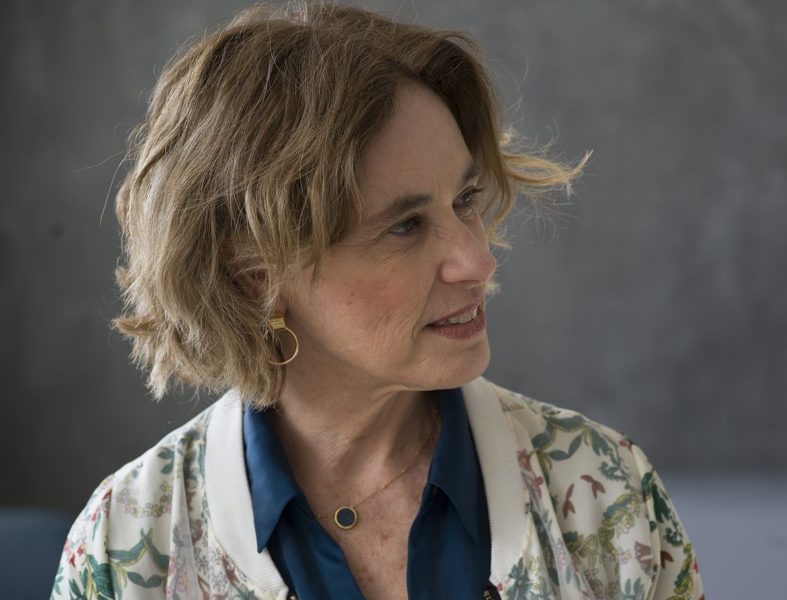
“My Starting Point Was Wrong”: Talking with Gil Hochberg about Writing, Mental Illness and Queer Survival
“He was ill independently of course; but nationally, a psychotic illness was brewing.”




-

“She Really Wanted Nothing to Do with It”: Gabriel Brownstein on the Ongoing Question of “Hysteria”
“I really became interested in the part of Freud that we don’t know much about, Freud before he became Freud.”
-

“How a Fire Builds”: Talking with Nina St. Pierre about Mental Illness, Art, and Survival
“In grad school, I’d had this wacky drunken idea that the book had to be meta to be proper.”
-

The Author and the Eulogist: On Love and Death in Nonfiction
Authorial responsibility to a real subject—living or dead—is one of art’s unresolved and probably unresolvable ethical questions.
-

Rethinking Holocaust Memory after October 7
“Why continue to teach the Holocaust? Why continue to build and visit Holocaust memorials and museums?”
-

Infiltrating the Family
For decades in the UK, police infiltrated the radical social movements by insinuating themselves into the intimate, romantic, familial, and comradely spaces of those on whom they spied.
-

“We Were Not That Band”—But What Was Sonic Youth?
Sonic Youth’s Thurston Moore’s memoir may tell us about his life. But he doesn’t give us much insight into the band they were.
-

A Hole at the Bottom of the Book
For the writers Annie Ernaux and Hilary Plum, a paradox emerges with each new book: writing attempts “carry to completion” something lived, but also changes the original experience.
-

On Not Asking “Should I Insert Myself in the Text?”
“We are obliged to acknowledge what we see and how we organize what we see.”
-

Our Siege Is Long
Throughout his life, poet Muin Bseiso narrated the history of Palestinian struggle and criticized Western portrayals of Gaza. Today, Bseiso’s son dodges Israeli bombs to preserve his archives.
-

“Finding Other Ways to Flow”: The Once and Future Le Guin
“There’s something very solitary in her writing as well. I almost think of it as solitary solidarity.”
-

Symonds’s Facts, Our Future
One Victorian historian realized that if ideas of sexual morality changed across time, then 19th-century Britain could change, too.
-

Saying Goodbye to Childhood: An Interview with Javier Zamora
“I hope people will see the heartbreak of a little kid having to grow up and say goodbye to his childhood in order to survive.”
-

Ogden & Hardwick’s Everyday Enigmas
“Good afternoon, ma’am. Do you ever feel that it is so hard to know how to be happy?”
-

Tender Gossip: Darryl Pinckney’s “Come Back in September”
Is there a writing life than can safely dispense with categories like identity and commitment, which count so much in how we live now?
-

Magnificent Wreck: Samuel Taylor Coleridge at 250
How to interpret Coleridge’s voluminous patchwork of triumphs, fragments, stolen snippets, and unrealized plans? Does any larger pattern emerge?
-

“Once It Is Written, It Is Forgotten”: Kate Zambreno on Hervé Guibert
“So I must begin again, when I only have months left to write it.”
-

Homeland Security Theater
These new DHS-funded graphic novels want to train citizens to be critical readers of all kinds of information, except their own propaganda.
-

Small Nations, Big Feelings
In the 1930s, Americans fell in love with Czechoslovakia and Spain; today, it’s Ukraine. What happens when one finds a “second mother country”?
-

The War with Inflation and the Confederacy
During the Civil War, the Lincoln administration demonstrated that a progressive agenda and effective anti-inflationary measures could overlap.
-

“The War Conquers You Not Only Physically”: Darya Tsymbalyuk on Plants and Humans in Ukraine
For several years, Darya Tsymbalyuk has been drafting a new history of Ukraine’s Donbas that overturns our assumptions. Rather than focus on the industrialization and war that have dominated the region, she interviews locals and asks them to draw maps of their hometowns, based on their memories and emotional connections. The resulting maps—which emerge in…